

Falling Film Evaporator
The falling film evaporator is a high-efficiency evaporation equipment. Its working principle is to add the material liquid from the upper tube box of the heating chamber of the falling film evaporator, and distribute it to each heat exchange tube through the liquid distribution and film forming device. Under the action of vacuum induction and air flow, it flows into a uniform film shape from top to bottom. During the flow process, the material liquid is heated and vaporized by the shell-side heating medium, and the steam and liquid phase generated enter the separation chamber of the evaporator together. After sufficient separation, the steam enters the condenser for condensation (single-effect operation) or enters the next-effect evaporator as The medium is heated, thereby achieving multi-effect operation, and the liquid phase is discharged from the separation chamber.
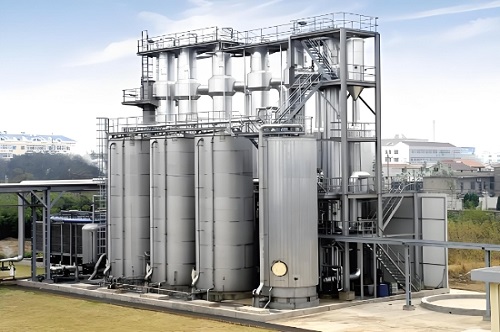
Our Evaporator is Applied in Various Fields
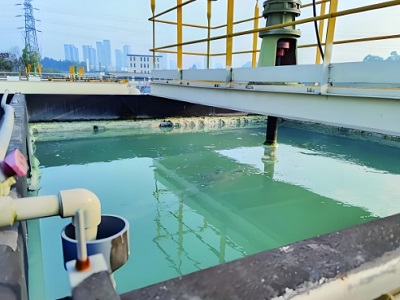
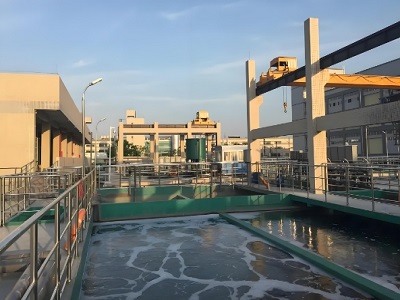
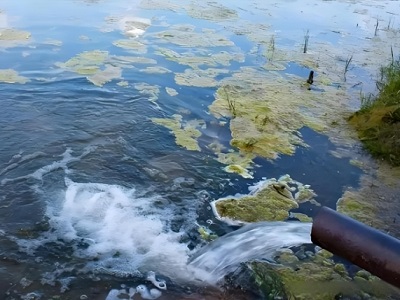
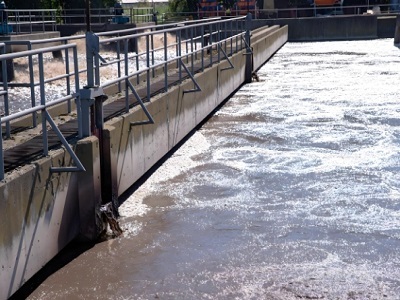
GQHB evaporator has mastered the core technology of low-temperature concentration, saving an average cost of 60% compared to traditional wastewater treatment. It is suitable for various industrial wastewater such as high salt wastewater, high COD wastewater, high concentration wastewater, oily wastewater, etc.
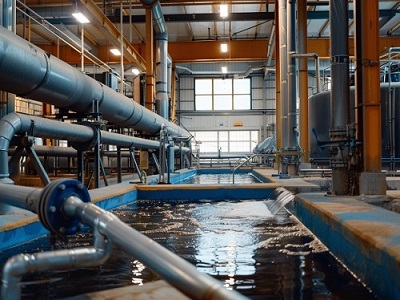
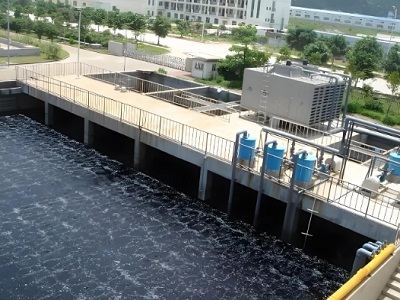
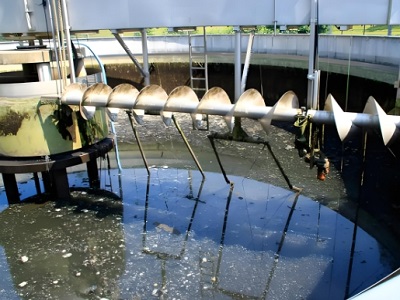
Introduction to Falling Film Evaporator
The falling film evaporator is an efficient evaporation and concentration device that evaporates by forming a thin film on the inner wall of the heating tube and flowing downward. Its main advantage is that it has high liquid film evaporation efficiency and is suitable for handling heat-sensitive and high-viscosity solutions. Widely used in food, pharmaceutical, chemical and other fields, falling film evaporators can achieve rapid concentration at lower temperatures and reduce heat loss of materials. They are ideal equipment for high-quality product processing.
Falling Film Evaporator Features
- High efficiency and energy saving: The falling film evaporator adopts the principle of thin film evaporation to achieve efficient evaporation at lower temperatures and significantly reduce energy consumption.
- Suitable for heat-sensitive materials: The equipment can operate at low temperatures and is suitable for processing heat-sensitive and high-temperature-intolerant materials to reduce material quality loss.
- Large processing capacity: The liquid forms a uniform liquid film on the heating tube wall, with good heat transfer effect, suitable for large-scale processing and improving production efficiency.
- Compact structure: The equipment occupies a small area and has a simple design. It is suitable for installation in limited spaces and is easy to clean and maintain.
- Stable operation: The falling film evaporator has a high degree of automation, stable operation, and can operate continuously for a long time to ensure the continuity and stability of production.
Product Advantages of Falling Film Evaporator
- Effectively save energy: The falling film evaporator reduces heating time and saves energy costs through rapid heat transfer and efficient evaporation.
- Strong adaptability: The equipment is suitable for processing various high-concentration and high-viscosity liquids to meet diversified production needs.
- Low-temperature operation: The falling film evaporator can operate under low-temperature conditions, and is especially suitable for the evaporation of heat-sensitive materials to ensure product quality.
- Convenient maintenance: reasonable design, the equipment is easy to disassemble and clean, the maintenance cost is low, and the service life of the equipment is extended.
- Environmentally friendly advantages: Low energy consumption and efficient processing reduce the impact on the environment and meet the needs of modern environmentally friendly production.
Working Principle of Falling Film Evaporator
- Liquid film formation: The liquid enters from the upper part of the heating tube, forms a uniform liquid film on the tube wall, flows downward, and gradually evaporates.
- Rapid evaporation: The liquid film is evaporated by heating to form secondary steam, which can be further utilized to improve the thermal efficiency of the equipment.
- Concentrated discharge: The concentrated liquid after multiple evaporations is discharged from the bottom to reach the required concentration concentration.