
Well, when we talk about this thing called a “direct expansion-type evaporator,” it’s also got another name folks in the field call it—the dry-type evaporator. Now, what’s all this fancy talk about? Let me break it down nice and simple for ya.
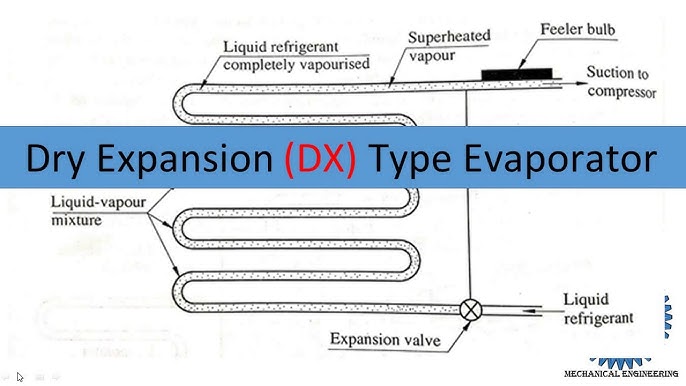
In air conditioning and refrigeration, this direct expansion (DX) coil system is what takes the heat outta one spot and gets rid of it somewhere else. It’s a pretty clever little setup that works by using something called thermodynamics. That’s just a big word for how heat moves around. The main player here is a liquid called refrigerant, and it does all the heavy lifting in this cooling business.
So, in a DX evaporator, this refrigerant stuff comes in as a mix of liquid and gas. Then, as it works its way through the coil, it absorbs heat and turns into a hot gas, or what the folks in the know call a “superheated vapor.” By the time this refrigerant gets to the end of the coil, it’s done soaking up all the heat it can, and the last bit of the coil is dry as a bone—that’s why they also call it the dry-type evaporator.
How This Direct Expansion Cooling Works
Picture this: when you turn on the air conditioner, you’re not just blowing cool air. Nope, this direct expansion evaporator coil is sucking up the heat from the air in the room. It’s like a sponge for heat, soaking it up and pushing it out to make things cool for you. This evaporator is what people sometimes call a cooling coil, chiller, or freezer because, well, it does all that cooling work.
- Refrigerant comes in: The refrigerant flows into the evaporator coil as a mix of liquid and vapor.
- Heat absorption: As the refrigerant moves through the coil, it sucks up heat, which makes it start turning into a vapor.
- Superheated vapor: By the end of its journey in the coil, the refrigerant has turned into a superheated vapor, meaning it’s hot and ready to release that heat somewhere else.
Now, you might wonder why it’s called a direct expansion coil. See, in this setup, the refrigerant goes straight from the compressor into the evaporator coil. No need for any extra middle steps, which keeps things simple and efficient. That’s what makes it “direct.” This is different from something like a flooded evaporator, which keeps more refrigerant in there. But in this case, we don’t want extra refrigerant hangin' around; we just want enough to do the job and keep it moving along.
Why We Use Direct Expansion Evaporators
So, what’s so great about these direct expansion evaporators? Well, there’s a few reasons:
- Energy Efficient: Because the system moves the refrigerant straight through the coil, it doesn’t waste a bunch of extra energy. This direct path means it’s cooling fast and gets the job done without much fuss.
- Cost-Effective: Fewer parts mean less money on repairs or replacements. A simpler setup is always cheaper and easier to maintain.
- Quick Cooling: When that refrigerant zips through the coil, it’s pulling the heat out of the air fast, which cools down the room quicker than other systems might.
Another thing, these evaporator coils, or DX coils, are built with fins that help transfer that heat better. For places that need a lot of cooling, like grocery stores, this direct expansion setup is perfect. It pulls heat out and helps maintain a steady temperature to keep everything cool.
Direct Expansion vs. Flooded Evaporator
Alright, now, let’s compare this direct expansion evaporator to the flooded evaporator. In the flooded system, the coil is filled up with more refrigerant than we need right away. It keeps some extra in there, so it can handle a bigger cooling load. But for most regular buildings, this extra refrigerant isn’t necessary.
On the other hand, the direct expansion setup is more like a “use what you need” kind of deal. The refrigerant doesn’t hang around longer than it has to; it just goes through, cools things down, and moves on. For homes, small stores, and regular offices, this is usually the better choice.
Wrapping It Up
So, there you have it—direct expansion-type evaporators, or dry-type evaporators as they’re called, are simple, efficient systems that do a whole lot to keep things cool without fuss. They work by using the basics of thermodynamics to pull heat outta the air and then push it out somewhere else, so the room you’re in stays nice and cool.
If you’re thinking about a cooling system that’s easy to maintain and quick to get things cooled down, a direct expansion coil system might just be the way to go. Simple, strong, and reliable—that’s what these evaporators are all about.
Tags: [direct expansion evaporator, DX coil, dry-type evaporator, cooling coil, refrigeration system]